Single-origin teas from Sri Lanka's six growing regions.
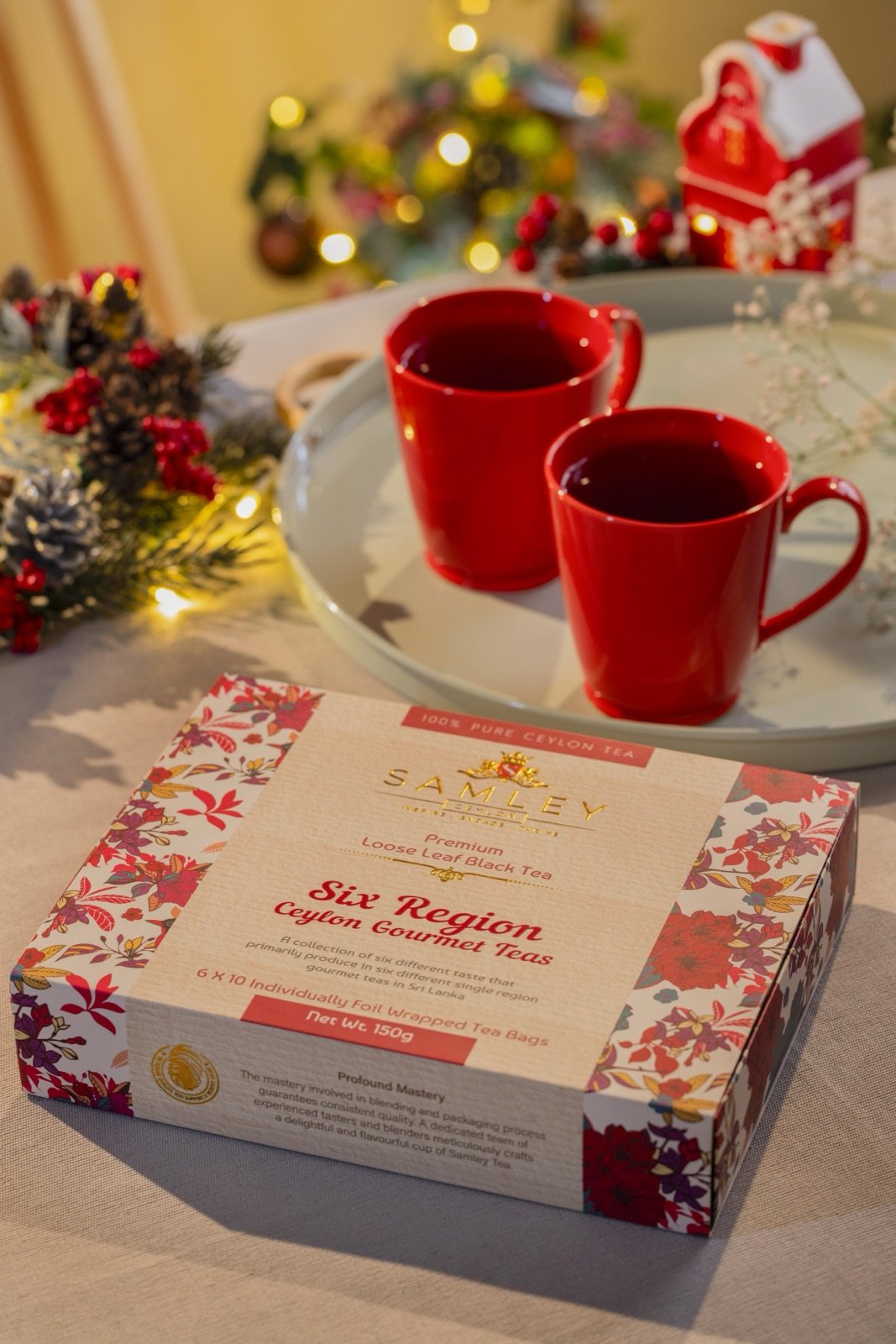
Ceylon tea is not a single flavour — it is six distinct characters, each shaped by the altitude, rainfall, and soil of a specific Sri Lanka growing region. Samley sources directly across all six regions — Nuwara Eliya, Dimbula, Uva, Ruhuna, Kandy, and Udapussellawa — and supplies single-origin Ceylon tea in bulk loose leaf from 500kg and private label formats from 50,000 units.
The character of Ceylon tea is defined by where it is grown. Sri Lanka's tea regions are classified by elevation into three bands — high-grown (above 1,200m), mid-grown (600–1,200m), and low-grown (below 600m). Each band produces fundamentally different flavour profiles.
Nuwara Eliya sits at the highest elevation, above 1,800m in Sri Lanka's central highlands. Cool temperatures and distinct seasonal variation produce Ceylon's most delicate tea — a light, golden liquor with a floral, almost champagne-like character. Dimbula (1,200m+) produces a medium-bodied, well-rounded tea with bright colour and clean flavour — the archetypal 'Ceylon tea' character that most Western consumers recognise.
Uva (eastern slopes, 900–1,500m) is known for its distinctively aromatic, slightly minty character produced during the unique dry-wind Cachan season. Udapussellawa shares elevation with Nuwara Eliya but produces a slightly rosier, medium-strength liquor. Kandy (mid-grown, 600–1,200m) delivers a full-bodied, copper-coloured tea suited to strong brewing. Ruhuna (low-grown) produces a bold, malty, dark-liquor tea suited to markets preferring heavy-bodied Ceylon.
Single-origin Ceylon tea is a growing segment within the premium tea market, driven by the same consumer interest in provenance and traceability that reshaped coffee. For buyers, regional single-origin offers a differentiation path beyond generic 'Ceylon tea' — connecting end consumers with specific growing regions and their distinct flavour stories.
Samley sources directly from its Sri Lanka supply network across all six growing regions and can supply regional single-origin teas in bulk loose leaf from 500kg per region. Private label packed formats — including custom branding and regional origin documentation — start at 50,000 units.
Udapussellawa is available both as a standalone single-origin supply and as a blending component. For buyers interested in multi-origin blending, Samley offers custom blending services — though public product messaging focuses on single-origin authenticity.
Nuwara Eliya tea is Ceylon tea grown in the Nuwara Eliya district at elevations above 1,800 metres — the highest tea-growing region in Sri Lanka. It produces a delicate, light-bodied tea with a pale golden liquor and subtle floral notes, often compared to a fine Darjeeling. It is the most refined and premium-priced of Sri Lanka's regional teas.
Nuwara Eliya is higher elevation (1,800m+) and produces a very delicate, light, floral tea. Dimbula is grown at 1,200m+ and produces a medium-bodied, brighter tea with more colour and a rounder flavour — the classic 'Ceylon tea' character most consumers recognise. Nuwara Eliya is premium positioning; Dimbula is the versatile workhorse.
Nuwara Eliya is famous for producing Sri Lanka's finest and most delicate tea, grown at the highest elevations on the island. The region's cool climate and unique terroir create a tea that is light, aromatic, and floral — distinctly different from the bolder teas produced in lower-elevation regions like Ruhuna or Kandy.
Yes. Udapussellawa is available both as a standalone single-origin supply and as a blending component. It produces a slightly rosier, medium-strength liquor that sits between Nuwara Eliya's delicacy and Dimbula's body. Available in the same formats and at the same minimums as other regional origins — 500kg bulk, 50,000 units private label.
Yes. Samley supplies single-origin Ceylon tea from all six growing regions independently. Bulk loose leaf is available from 500kg per region. Private label packed formats start at 50,000 units per regional origin and include regional provenance documentation.
Grade availability varies by region and season. The most common grades across all six regions are OP (Orange Pekoe), BOP (Broken Orange Pekoe), and BOPF (Broken Orange Pekoe Fannings). Some regions also produce speciality grades seasonally. Contact our team for current grade availability per region.
Bulk loose leaf minimum is 500kg per regional origin. Private label packed formats — including custom branding and regional origin documentation — start at 50,000 units. Lead time for a first order is 6–8 weeks.
Request regional samples or get a wholesale quote.