
A tea can be 95% Ceylon leaf and still be refused the Lion Logo. The Sri Lanka Tea Board allows its lion only on packs of 100% Ceylon tea packed in Sri Lanka, and if the leaf is blended with tea from anywhere else, the lion does not go on the pack, even at 95% Ceylon.
That one rule is worth more than any top-ten list when you are choosing among the best Ceylon tea brands in Sri Lanka, whether you are in a Colombo supermarket, an airport shop or an online store on the other side of the world. And there are a lot of names to choose from: Sri Lanka has hundreds of tea exporters, many selling under their own brands.
We make and pack tea ourselves, so we are not going to rank anyone. We would be marking our own homework. What we can do is show you how to read a pack, so the brand you pick is genuine and suits the way you actually drink tea.
1. Start with the Lion Logo
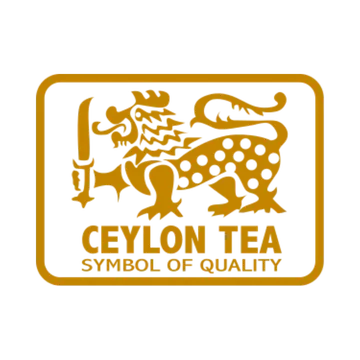
The Lion Logo is owned by the Sri Lanka Tea Board. According to the Export Development Board, a pack can carry it only if:
- it contains nothing but 100% pure Ceylon tea,
- it was packed in Sri Lanka, and
- it meets the quality standards set by the Tea Board.
That second condition surprises people. Overseas importers and packers cannot use the lion even if their packs hold only Ceylon tea. Before approval, packs are evaluated by the Tea Board's Tea Tasting Unit, and the Tea Exporters Association notes that products must pass a quality test as well as meet the legal requirements of the scheme.
What the lion does not tell you: which region the tea came from, which grade it is, when it was packed, or whether you will like it. It is a floor, not a ranking.
2. Packed in Sri Lanka, or blended abroad?
Tea labelled "Ceylon" is also packed outside Sri Lanka. Some of it is pure Ceylon leaf, which simply cannot carry the lion because of where it was packed. Some of it is a blend in which Ceylon is one origin among several. Phrases like "Ceylon blend" or "with Ceylon tea" are your cue to read the ingredients and the country of origin before you buy.
Whether a brand's Sri Lankan and export packs differ is a question only that brand can answer. What you can check yourself is the lion, the packing country and the ingredients line.
3. One region, or a blend?
Ceylon tea is not one flavour. Elevation and weather change the cup. Sri Lanka has seven tea-growing regions; the six below are the ones we sell as single-origin teas, and they are distinct enough to taste side by side:
| Region | Elevation | In the cup |
|---|---|---|
| Nuwara Eliya | Highest, above 1,800 m | Light, pale golden, floral and delicate |
| Udapussellawa | High-grown | Rosy, medium-strength |
| Dimbula | 1,200 m and above | Bright and mellow, the classic "Ceylon" cup |
| Uva | Eastern slopes | Aromatic, sometimes with a menthol note from its dry-wind season |
| Kandy | Mid-grown, 600 to 1,200 m | Full-bodied and copper-coloured |
| Ruhuna | Low-grown | The darkest and strongest, bold and malty |
A single-region tea tastes of one place and may shift a little with the season. A blend is built by tasters to taste the same pack after pack. Neither is the "better" choice. If you want to explore, buy single-region. If you want your morning cup to be reliable, a good blend does that job. For why these regions differ so much, read our piece on why Ceylon tea stands alone.
4. The grade letters on the pack
Grade names describe the size and shape of the leaf. They are not a quality score, and a smaller grade is not a lesser tea. Definitions below are from the Tea Exporters Association:
| Grade | What the TEA says | Good for |
|---|---|---|
| OP (Orange Pekoe) | Whole leaf, well twisted; a delicate brew that varies by district | Plain tea, no milk |
| OP1 | Long, wiry, well or partly twisted leaf | Plain tea, slow and gentle |
| BOP (Broken Orange Pekoe) | A popular size with a good balance of taste and strength | Everyday tea, with or without milk |
| FBOP (Flowery BOP) | Smaller than BOP1, with tips | Everyday tea from a slightly more open leaf |
| BOPF (BOP Fannings) | Smaller than BOP, stronger in taste | Strong milk tea, tea bags |
| Dust | The smallest particles, used in bags to infuse fast | Quick, strong bags |
Match the grade to how you drink. If you take milk and sugar, an OP will taste thin. If you drink it plain, a BOPF may be too strong.
5. Certifications: what each one actually proves
Logos pile up on tea packs. Each one checks something specific, and none of them checks taste or freshness.
| Label | What it verifies |
|---|---|
| Lion Logo | 100% Ceylon tea, packed in Sri Lanka, meeting Tea Board quality standards |
| USDA Organic | At least 95% organic ingredients, certified by an agent authorised under the US National Organic Program |
| Fairtrade | A Minimum Price safety net, an extra Fairtrade Premium, and standards on rights at work and safe conditions |
| Rainforest Alliance | Farms and companies checked periodically by independent auditors against the Rainforest Alliance standard |
A certified tea can be stale, and an uncertified one can be excellent. Certifications tell you how the tea was grown and traded. Your nose tells you the rest.
6. Freshness and the packing date
Look for the date of manufacture or packing on the label, and use it. Choose the most recent date on the shelf, prefer foil-lined or airtight inner packs, and if you are buying gifts to carry home, pick sealed packs over loose-filled caddies.
7. Price and quality
Price usually follows the leaf and the work: higher elevations, whole-leaf and hand-made grades, rare tips, and certified supply chains cost more. The box costs money too. With a gift pack, part of what you pay for is the tin or the carved wood. That is fine if the box is the point. If the tea is the point, read the grade and region before you admire the packaging.
The label-reading checklist
Take this into the shop, or keep it open on your phone.
| Check | What good looks like | Think twice if |
|---|---|---|
| Lion Logo | Present on a pack that says 100% Ceylon | The pack says "pure Ceylon" and "packed in Sri Lanka" but has no lion |
| Packed in | Sri Lanka, with a producer's name and address | Only an importer's address and no country of packing |
| Ingredients | "100% Ceylon tea", or every origin named | "Ceylon blend" with nothing else explained |
| Region | A named region or estate | Only words like "premium" or "finest" |
| Grade | A grade that suits how you drink it | No grade at all on a loose-leaf pack |
| Date | A recent date of manufacture | No date, or a sticker over the date |
| Certifications | Logos with the certifier named | Logos with no certifier or licence detail |
| Pack | Foil-lined or airtight, sealed | Torn inner bags, a stale or musty smell |
| Price | In line with the grade and region | A luxury price on dust-grade tea bags |
Where we fit
We are one of those many Sri Lankan brands, and we would ask you to hold our packs to the same checklist. We blend and pack in Sri Lanka, and we make single-origin teas from all six regions in the table above, sold as our Regional collection. If you are buying a gift, our Heritage collection includes Masala Chai, Black Tea and Earl Grey in 140-bag packs with traditional Sri Lankan designs, on a BOPF Ceylon base, Lion Logo certified.
Frequently asked questions
Is Ceylon tea the same as Sri Lankan tea? Yes. Ceylon was the island's name when its tea trade was built, and tea grown in Sri Lanka is still sold as Ceylon tea. Our history of Ceylon tea tells that story, from a failed coffee crop to the first tea field at Loolecondera.
Which Ceylon tea is the strongest? Look for low-grown tea from Ruhuna in a small grade such as BOPF or dust. Low elevation gives a darker, bolder leaf, and the small particle size extracts fast. That combination makes a very strong cup, especially with milk.
Who are the biggest tea companies in Sri Lanka? Size is a different question from which brand suits your cup. If you are curious about the companies behind the trade, our guide to the top tea exporters in Sri Lanka covers that landscape. For choosing a pack to drink, the checklist above will serve you better.