
Finding the best green tea in Sri Lanka is mostly a matter of knowing what you are looking at. Ceylon green tea is made in small volumes by a small number of producers, and the good ones are delicate, bright and, brewed properly, not bitter at all. The trouble is that the pack rarely tells you which kind you are holding. This guide does.
Sri Lanka is a black tea country first. In 2025 green tea was about 1.9% of its tea exports, roughly 4,900 of 257,400 tonnes, according to Forbes & Walker's export figures, and we say that as a company that makes both.
A small category with a long history
Green tea is not new here. The Sri Lanka Tea Board traces it to 1842, when Maurice Worms planted China seedlings on Pussallewa and Ramboda estates and brought in tea makers from China. Today, the Board says, Ceylon green tea is made by eleven manufacturers on estates in the mid-grown and high-grown districts, using both Chinese and Japanese methods. The Export Development Board places most of it in Uva and Nuwara Eliya, and estimates that Sri Lanka supplies only about 3% of global demand for green tea.
The bush matters more than many labels admit. Tea grown from Chinese seedlings gives a smaller leaf and a subtler flavour than the Assam type common on Sri Lankan estates, the Tea Board notes. The EDB goes further: green tea from Assam stock has a fuller body and a more pungent, malty, nutty flavour, while tea from Chinese or Japanese seedlings brews very light and bright yellow, with a more delicate, sweet taste. Two Ceylon green teas can taste like two different drinks.
How it is made, and what that does to your cup
Green tea skips the withering and oxidation that turn a leaf into black tea. How the leaf is then heated sets the style. Chinese-style green tea is typically pan-fired in a dry wok, while Japanese-style teas such as sencha are steamed, which gives a sweeter, grassier flavour. Sri Lanka makes both styles, so the grade name on the pack is your best clue to what is inside.
Grades you will see on a pack
| On the pack | What it means | What to expect | Steep at about 80°C for |
|---|---|---|---|
| GP1 / Gunpowder | Leaf rolled into tight pellets. The Tea Exporters Association defines GP1 as twisted, coarse leaf that "must be green" | Pellets open slowly; a fuller, steadier cup | 3 to 4 minutes |
| Young Hyson / Chun Mee | Twisted, curled leaf in the Chinese style | Chinese-method green tea | 2 to 3 minutes |
| Sencha | Japanese-style green tea | Sweeter and grassier | 2 to 2.5 minutes |
| Green tea fannings | Small broken particles, often used in tea bags | Fast and strong, turns harsh if left too long | About 2 minutes |
| Flavoured (mint, lemon, jasmine) | Green tea plus leaves, peel, flowers or flavouring | Depends on the base tea | 2 to 3 minutes |
| Green tea powder | Leaf ground to a fine powder; the EDB lists it among Ceylon green tea types | Whisk it into water, do not steep | Not steeped |
Steep times for gunpowder, jasmine and sencha follow the UK Tea & Infusions Association.
Loose leaf, bags or flavoured?
Loose leaf shows you the grade, often the region, and gives a cup you can steep twice. We re-steep good loose green tea once; the second cup is lighter and often sweeter.
Bags trade depth for speed. They usually hold fannings or dust, which the Tea Exporters Association describes as the smallest particles, used in bags "to infuse rapidly". Fast infusion is handy on a weekday morning. It is also why a green tea bag left in for five minutes goes harsh: steeping too hot or too long draws out the bitter compounds in any green tea, whatever its quality.
Flavoured green tea is fine if you enjoy it, and mint or lemon can make a first green tea easier to like. Read the ingredients: mint leaf or lemon peel named in the list is a different thing from a line that says only "flavouring".
Freshness and reading the label
In our experience, green tea loses its fresh aroma faster than black tea, so freshness matters more here than with your usual black tea. Before you buy, check:
- The Lion Logo. It can only appear on packs of 100% pure Ceylon tea packed in Sri Lanka that meet Sri Lanka Tea Board quality standards, the EDB explains. It tells you origin, not flavour.
- The date of manufacture or packing. Look for it on the label and pick the most recent date on the shelf.
- The grade and, ideally, the region. "Green tea" alone tells you little. GP1, sencha or a named region tells you what kind of cup to expect.
- Organic claims. A USDA Organic seal means the product has at least 95% organic ingredients, certified by an agent authorised under the US National Organic Program. It says nothing about taste.
- Pack size. Buy an amount you will finish while it still smells fresh. Once opened, keep it airtight and away from moisture, light and strong smells, as we explain in the art of the perfect brew.
What about price? Shelf prices change too often to be worth printing, but the drivers are steady. Loose whole leaf costs more than bag fannings, hand-made small batches cost more than machine-made tea, and organic certification and imported flavourings add to the price. If two packs cost the same, the one with the grade, the region and the recent date on it is the better buy.
How to brew green tea so it is not bitter
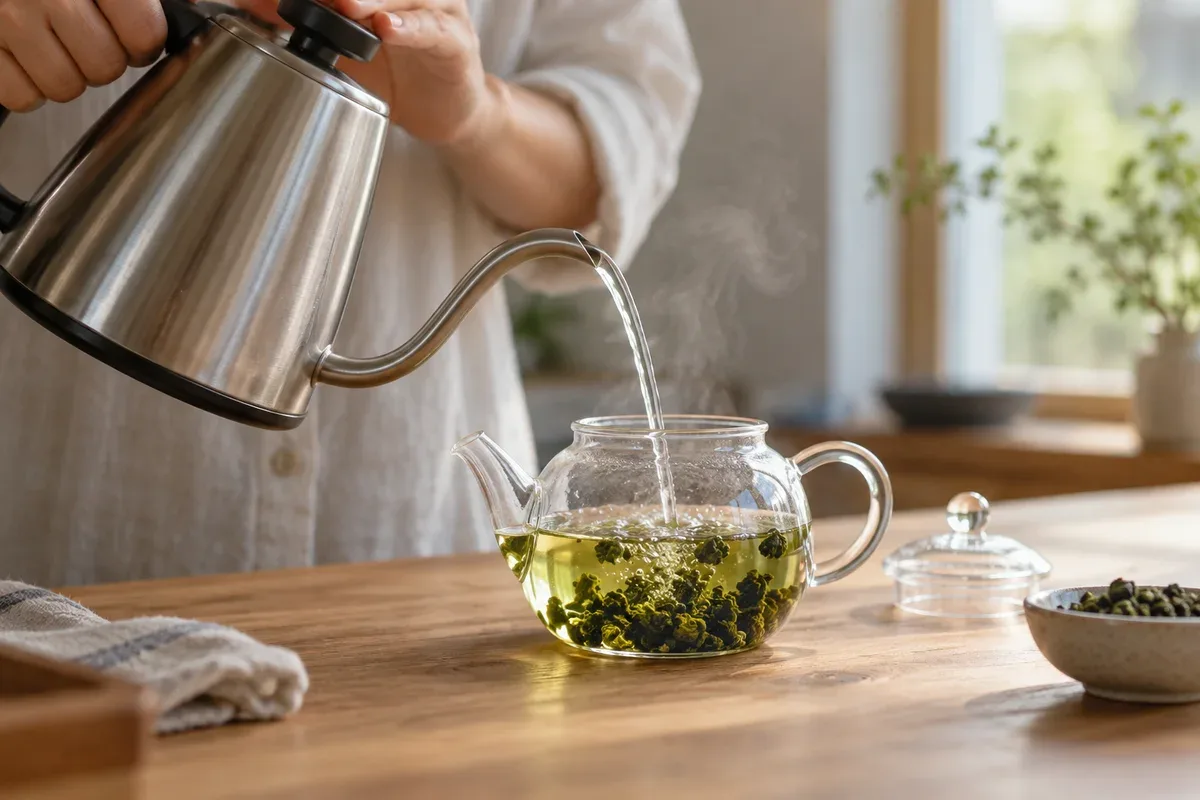
Bitter green tea is usually a brewing problem, not a tea problem. Three numbers fix it:
- Water at about 80°C. That is the UK Tea & Infusions Association's guide temperature for green tea, against 90 to 98°C for black.
- 2 to 3 g of leaf per 200 ml, or one tea bag per cup.
- 2 to 3 minutes, shorter for sencha and bags, a little longer for gunpowder. Or follow your pack: ours suggest 1 to 2 minutes at 70 to 80°C, which suits a lighter cup.
No thermometer? Mix three parts just-boiled water with one part tap water. If your tap water is around 30°C, the arithmetic is (3 × 100 + 1 × 30) ÷ 4 = 82.5°C, and the cup and pot take a few degrees more. Close enough.
Green tea still has caffeine, roughly 20 to 45 mg a cup, as we set out in our look at the health benefits of Ceylon tea, where we also cover the catechins that make green tea interesting to researchers.
Green tea and weight loss: the straight answer
If you are buying green tea to lose weight, here is what the evidence says. A Cochrane review of 15 weight-loss studies and 3 weight-maintenance studies, with 1,945 participants, found that green tea preparations produced a small weight loss that was not statistically significant and was unlikely to be clinically important. The US National Center for Complementary and Integrative Health puts it as a "modest effect" at most.
The same NCCIH page makes a second point worth knowing. No safety concerns have been reported for green tea drunk as a beverage by adults, but liver injury has been reported in some people using green tea products, mainly concentrated extracts in tablet or capsule form. So drink green tea as tea, and be wary of any pack or pill promising to burn fat. The honest win is simpler: an unsweetened cup of green tea in place of a sugary drink.
The best green tea for you
There is no single best green tea in Sri Lanka. There is the best one for the way you drink it. Here is what to look for in any brand, and where our own range fits if you want to try it.
| If you want | Look for | From our range |
|---|---|---|
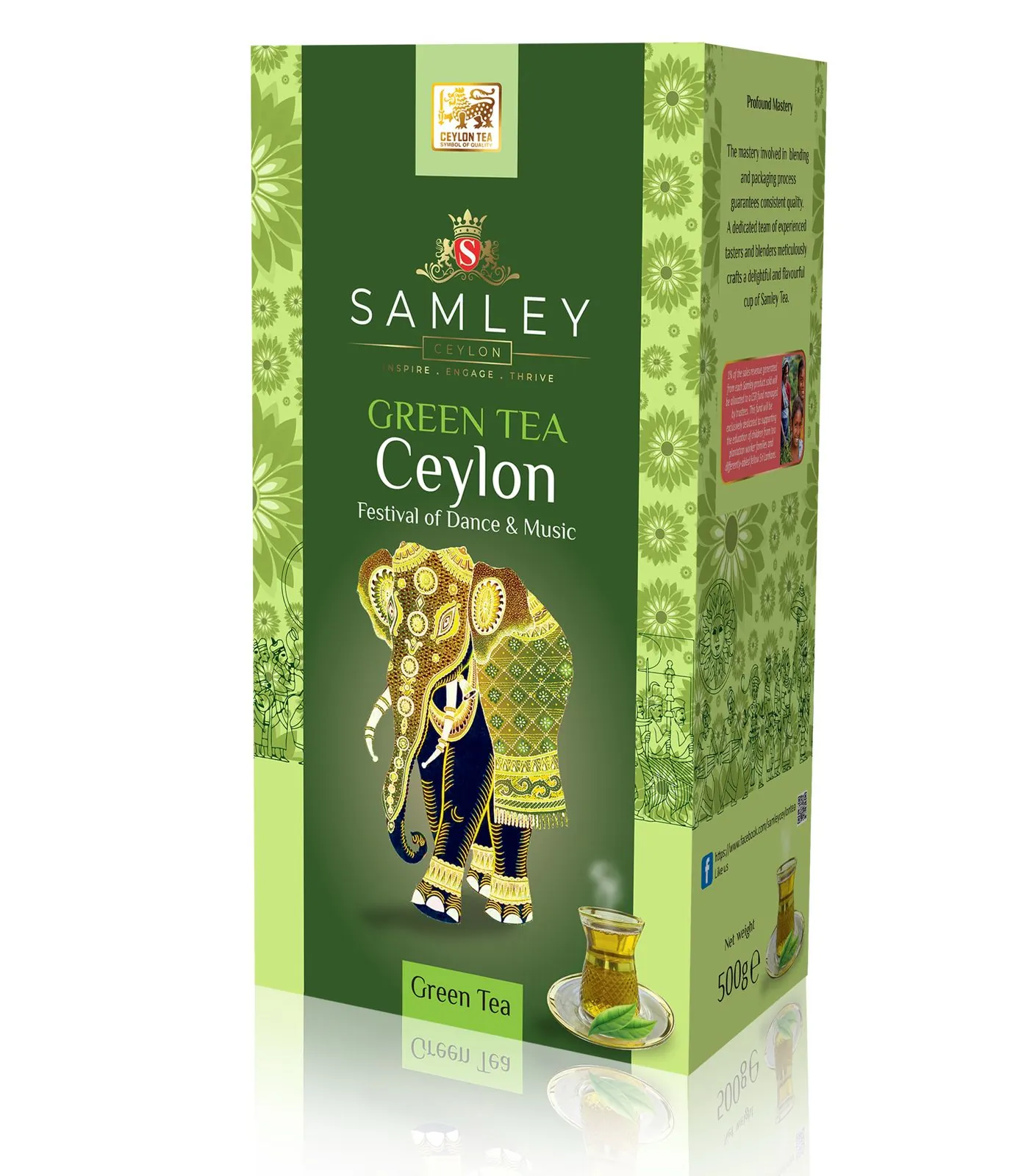
| An easy daily cup | Plain Ceylon green tea bags, no added flavour, a recent manufacture date | Ceylon Green Tea tea bags: 100% Ceylon green tea, no added flavours or colours |
| Loose leaf you can re-steep | GP1 or sencha-style whole leaf, with the grade named | Sencha Delight, a loose sencha-style green tea from our luxury range |
| Something flavoured | Mint or lemon named in the ingredients list | Green Tea with Mint, or Lemon Green Tea for citrus |
| A special, small-batch tea | Hand-rolled leaf, small lots, a producer who explains how it is made | Our Hand Made Green Tea (below) |
The last row is the tea we are quietly proudest of. Our hand-made green tea is rolled by hand and processed at low temperature. When we had a batch tested by the Tea Research Institute of Sri Lanka, it came back at 35.30% polyphenols, a figure we report from that test. Polyphenols are the family of compounds, catechins included, that make green tea interesting to scientists. We share the number as a sign of careful making, not as a health claim about your cup.
Where to start
If you are new to Ceylon green tea, start with plain bags, 80°C water and two minutes. If that first cup surprises you, move to loose leaf and taste the difference a named grade makes. Our full Ceylon green tea collection is the place to browse both.