
Ask the Private Label Manufacturers Association what private label means and you get a narrow answer: "merchandise sold under a retailer's brand," meaning the supermarket's own name or a name the retailer created for itself. Ask a founder who has just been quoted for "private label coconut water" and it means something much looser: a manufacturer's proven drink with your brand on it.
Both meanings are in daily use. So are "co-packing" and "contract manufacturing", sometimes by the same supplier in the same email. None of that would matter if the words didn't decide real things, but they do. Choosing between contract manufacturing and private label is really a question about who owns the recipe, how fast you can launch, and what you can take with you if you ever change maker.
Here is how we untangle them. We use all three models ourselves, so this is less a textbook than a description of three different doors into the same factory.
Three models, in plain terms
Private label. The manufacturer already makes the product. You choose it, maybe adjust it slightly, and sell it under your brand. The liquid is theirs; the brand, the artwork and the customers are yours. White label is the close cousin: the same finished product goes out under several brands with little or no change.
Contract manufacturing. The manufacturer makes your product to your specification. You arrive with a formula, or you pay for one to be developed for you, and the factory's job is to reproduce it exactly, batch after batch. You will also hear this called OEM production when you bring the design, and ODM when the manufacturer designs the product and you put your name on it.
Co-packing. In food and drink, this usually means a contract manufacturer that also fills and packs: your drink goes in, sealed and cased cans come out. The word stretches, though. In other sectors, contract packaging can mean packing work alone, such as re-working stock or assembling non-standard packs that need special machinery or labour-intensive work. If a supplier says "co-packer", ask whether they make the liquid or only pack it. (If you are new to the whole idea, start with what co-packing is and how a project runs.)
Where do they overlap? Almost everywhere, in drinks. A canning line that develops a recipe for you is doing contract manufacturing. The same line putting your sleeve on a drink it already makes is doing private label. One factory, three arrangements, and the one you are in is set by the contract, not by what the supplier calls itself.
The question that matters most: who owns the formula
This is the clause that is easiest to skip at the start and most expensive to argue about at the end.
Private label: the recipe stays with the maker. You own the brand. If you move to another manufacturer, you take your name and your customers, but not the liquid. The new maker has to match it, and your customers will be the judges of how well they did.
Your own formula: it stays yours, if you write it down. A food and beverage law firm puts the usual split this way: "the brand should retain ownership of its formulas, process specifications, and artwork, while the co-packer retains preexisting know-how and generic manufacturing methods." A confidentiality agreement before you share the recipe is the minimum.
A formula developed for you, or changed for scale-up: the grey zone. In guidance published by the Specialty Food Association, attorney Jeni Lamb Rogers notes that co-packers typically modify formulas for scaled production, and advises brands to "ensure you own the formula after alteration" and to confirm who owns any processing innovation developed while working on the product. If your contract is silent, you may find that the version on the shelf, the one your customers actually like, isn't entirely yours.
Our view: settle ownership before development starts, not after the first successful run.
A decision table
These are general patterns, not any one supplier's terms. Minimums in particular vary by maker; the University of Florida's extension service notes that larger co-packers only produce larger amounts, while smaller ones offer smaller runs.
| Private label | White label | Contract manufacturing (your formula) | Formula developed for you | |
|---|---|---|---|---|
| Whose formula | The maker's | The maker's | Yours | Whoever the contract names |
| Whose brand | Yours | Yours (and others', on the same liquid) | Yours | Yours |
| What sets the minimum | Your packaging run on an existing product | The maker's standard batch | Line set-up, changeover and materials for a new recipe | As contract manufacturing, plus development and sampling |
| Your control over the liquid | Low: choose and tweak | None | High, via the written spec | High once agreed, if ownership is clear |
| Speed to shelf | Fastest: recipe and process already proven | Fast | Slower: scale-up and approval | Slowest: development before scale-up |
| Can you take it elsewhere? | Brand yes, liquid no | Brand yes, liquid no | Yes | Only if the contract says so |
| Best when | Speed matters more than a unique liquid | Testing a channel with the least development | The recipe is your advantage | You have a concept, not a recipe |
Which model suits which founder
You have a brand and a route to market, but no recipe. Private label gets you on shelf fastest. Accept that your differentiation will come from brand, price and distribution rather than the liquid.
You have a recipe people already buy. A café drink, a market-stall bestseller, a family recipe with a following. Contract manufacturing to your formula protects the thing that got you this far. Scale-up may change it slightly, so taste the samples hard.
Your recipe is the whole business. A specific functional blend, an unusual botanical. Contract manufacturing, with ownership, confidentiality and improvements covered in the contract before you share a gram of the spec.
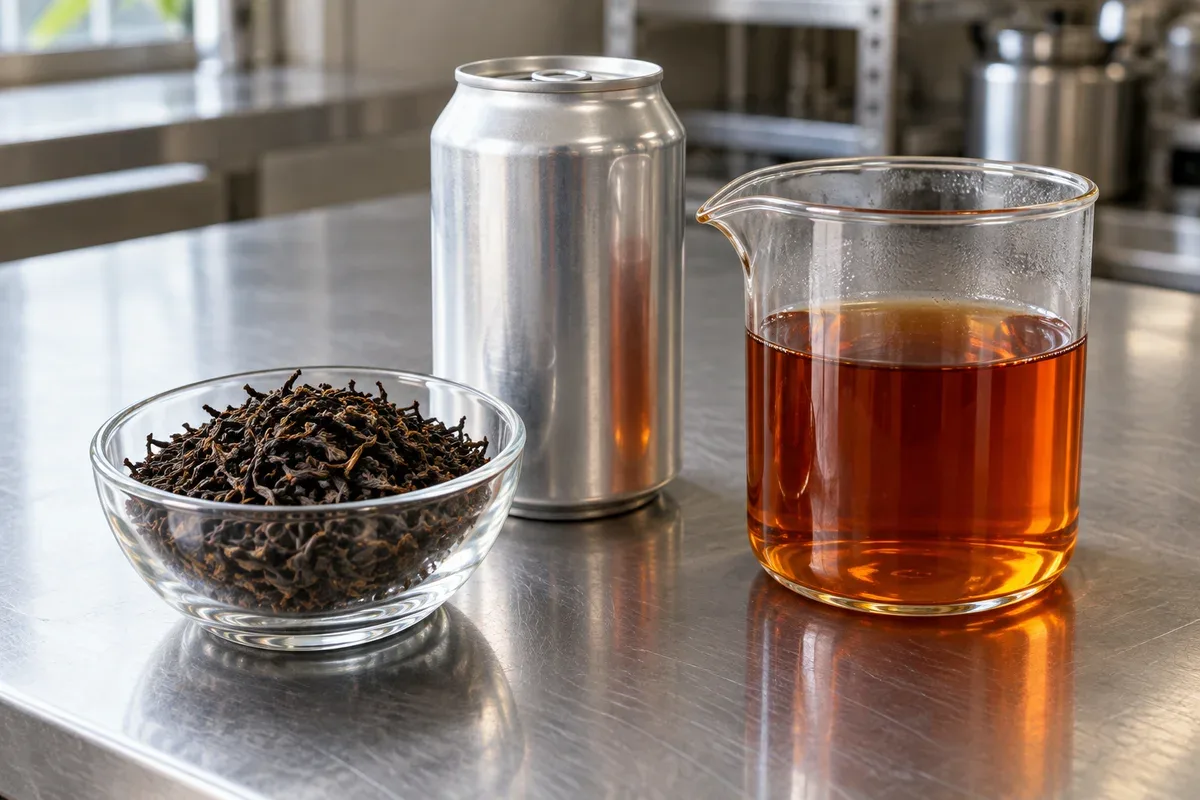
You are a tea or coffee brand adding a ready-to-drink. You probably know your leaf better than any factory does, but not how it behaves in a sealed, heat-treated can. A formula developed with the maker, from your tea, puts both kinds of knowledge in the can. Just make sure you own the result.
You pack your own product and only need the raw material. Then you need none of these. You need a bulk supplier.
Where Samley sits
We work in all three ways, and it helps to be specific about which is which.
- Private label tea. Our Ceylon blends, in loose leaf, tea bags, tins and cartons, packed under your brand. Our private label tea programme covers the formats and the process.
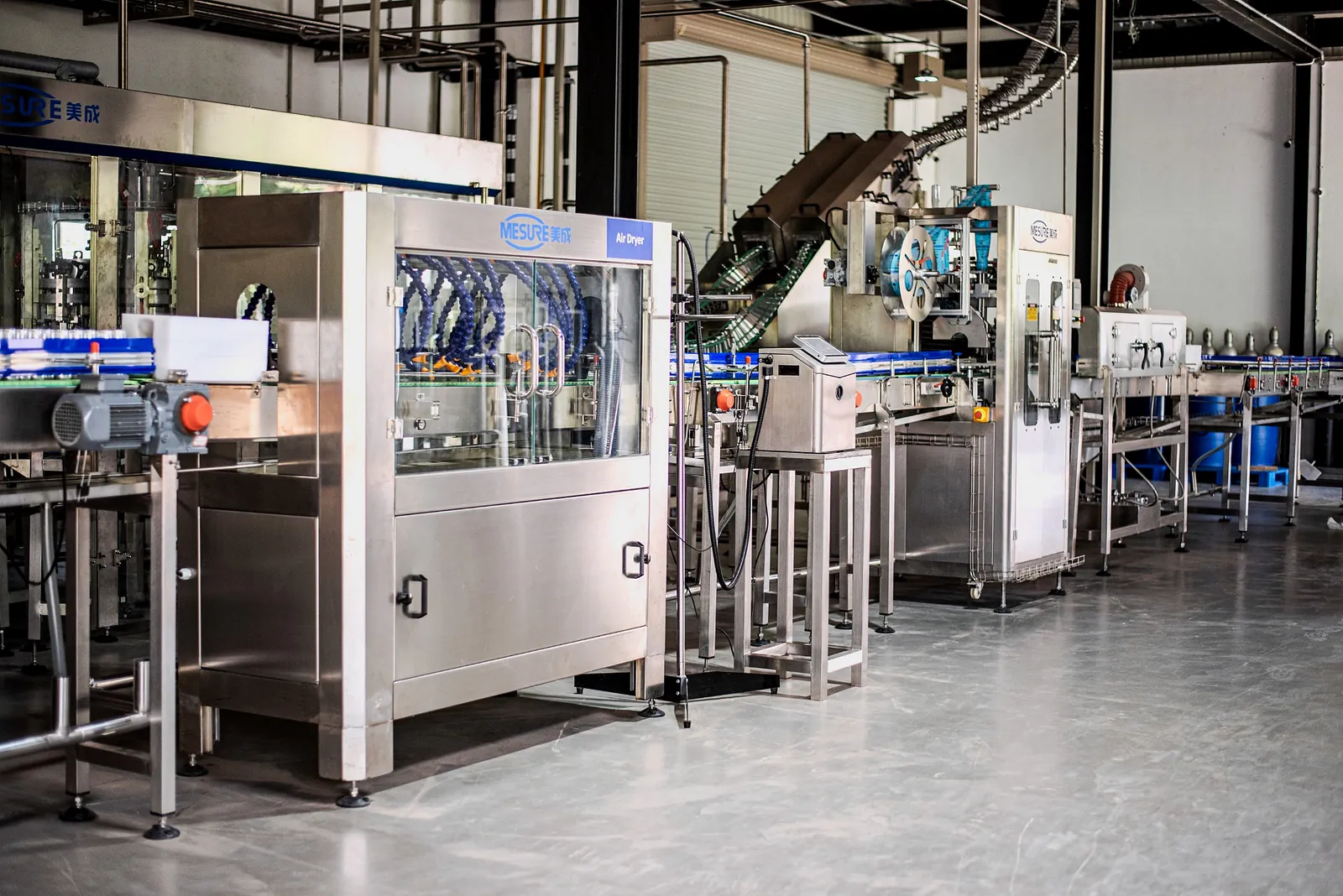
- Co-packing canned drinks. On our own canning line in Sri Lanka, you either hand us a finished formula and we can it to spec, or our blending team develops the recipe with you. The beverage co-packing page lists what the line fills. For coconut water, we offer private label on our own organic coconut and king coconut water as well as OEM work to your specification, set out on the coconut water co-packing page.
- Bulk supply. For brands that blend or pack themselves, we supply bulk Ceylon tea.
Our minimums, so you can tell early whether we fit:
- Private label tea: 2,500 retail packs per SKU. Several SKUs can share one container.
- Bulk tea: from one pallet.
- Canned drinks: 10,000 cans per flavour per run, with 50,000 preferred, and 10,000 sleeves per design.
Samples are free; for tea, you cover the courier. A first tea run takes six to eight weeks after the artwork and samples are approved, and a first canned run takes about the same, most of it spent importing cans, lids and sleeves.
Three questions that come up
Is private label OEM or ODM? Closer to ODM. The manufacturer designed the product and you brand it. OEM is the better description when the product is built to your design or formula. These labels are borrowed and loosely used, so ask any supplier to describe the arrangement in plain words: whose recipe, whose design, whose brand.
Can I start on private label and move to my own formula later? Yes, and it is a sensible path when you want to prove demand first. Plan for it: your customers know the private label taste, so a new formula should be benchmarked against it before you switch, and your brand name should be registered to you, not tied to the supplier.
Whose name goes on the label? Yours, and with it the responsibility. Under EU food law, the operator responsible for the label information is the one under whose name the food is marketed, or the importer if that operator is outside the EU. Whichever model you choose, the words on the pack are your job to get right.
Not sure which door is yours?
Tell us what you have: an idea, a recipe, or a brand looking for a product. Include the drink or tea type and the market you are selling into. We will tell you which model fits, including when the honest answer is a model we don't offer. Send us your brief.