
Pick up a can from a young drinks brand and read the small print near the barcode. There is a good chance the brand's name follows the words "Manufactured for" or "Distributed by". That isn't modesty. In the US, federal labelling rules require a qualifying phrase like that whenever the company named on the label did not make the food itself. Somebody else made it, and this guide is about who that somebody is.
Co-packing is the arrangement where one company makes and packs a product that another company sells under its own brand. The University of Florida's extension service defines a co-packer as "a manufacturer that will produce, package, and/or label a product for clients." You own the brand and the customer. The co-packer owns the factory and the daily work of running it.
The company may call itself a co-packer, a co-manufacturer or a contract manufacturer; even the sector's trade body is the association for contract packagers and manufacturers. In drinks the words mostly describe the same thing. Where they genuinely differ, and where private label fits in, is covered in our guide to co-packing vs contract manufacturing vs private label.
We run our own canning line in Sri Lanka, so this is co-packing seen from the factory side, including the parts that don't flatter co-packers.
What a co-packer does, and what stays yours
The short version: the co-packer turns your specification into sealed, cased, palletised product. Everything that decides whether that product sells stays with you.
Oklahoma State University's guide for food businesses draws the same line. The co-packer carries the plant, including "licenses and permits, and the overall sanitation," so the brand owner can spend their time on marketing, distribution and sales.
The detail in between moves from deal to deal. This is the table we would suggest you fill in, in writing, before any money changes hands:
| Stage | Usually the brand owner | Usually the co-packer | Pin down in the contract |
|---|---|---|---|
| Recipe | Owns the formula, or pays to have one developed | Scales it to the line, or develops it from a brief | Who owns the formula after any changes |
| Ingredients | Approves specifications and approved suppliers | Buys and stores them (turnkey), or receives yours (fill-only) | Who pays for waste, shortages and substitutions |
| Packaging | Artwork, label copy, on-pack claims | Sources cans, lids and sleeves on turnkey projects | Who carries leftover packaging if the run changes |
| Filling | Signs off the sample and the written spec | Runs blending, filling, seaming and heat treatment | Tolerances for fill level, carbonation, pH, sugar |
| QA | Sets acceptance criteria; may audit | In-process checks, batch records, holds and releases | What happens to a batch that fails spec |
| Storage | Decides how much finished stock to hold | May hold pallets for an agreed period | Free storage period and the charge after it |
| Shipping | Books freight or appoints a forwarder | Palletises, cases and prepares documents | The Incoterm, and where ownership passes |
Two rows deserve a second look. Recipe first: a kitchen formula may need adjusting to survive a real line, and NC State Extension warns that ingredient changes "may render your ingredient statement or nutritional information on your label inadequate." The same guide says the entrepreneur should furnish the labels. So any change in the tank has to be matched on the can, and that job is yours.
Then QA. You won't stand on the floor for every run, so what you get instead is paper: the agreed spec, batch records, test results and the right to audit. Ask to see a sample batch record before you sign. It tells you more about a co-packer than their website does.
Turnkey or fill-only
Co-packing deals come in two broad shapes, and it helps to know which one you are being quoted.
Turnkey. The co-packer buys the ingredients and packaging, makes the drink and invoices you per finished unit. You manage one relationship instead of five, and one party is accountable if something runs late. The cost is a margin on materials and less visibility of what each input costs.
Fill-only (also called toll processing). You buy and deliver the ingredients and packaging, and the co-packer charges for the processing. You see every cost and control every supplier. You also carry the delivery risk: if your cans arrive late, your line slot may go to another brand.
Neither is better in the abstract. If you have no supply relationships yet, turnkey saves you building all of them at once, in the same month you are designing a label. If a signature ingredient is the whole point of your drink, fill-only keeps control where it matters.
Our own projects run turnkey. We import the cans, lids and full-wrap sleeves as part of the job.
Why drink brands use a co-packer
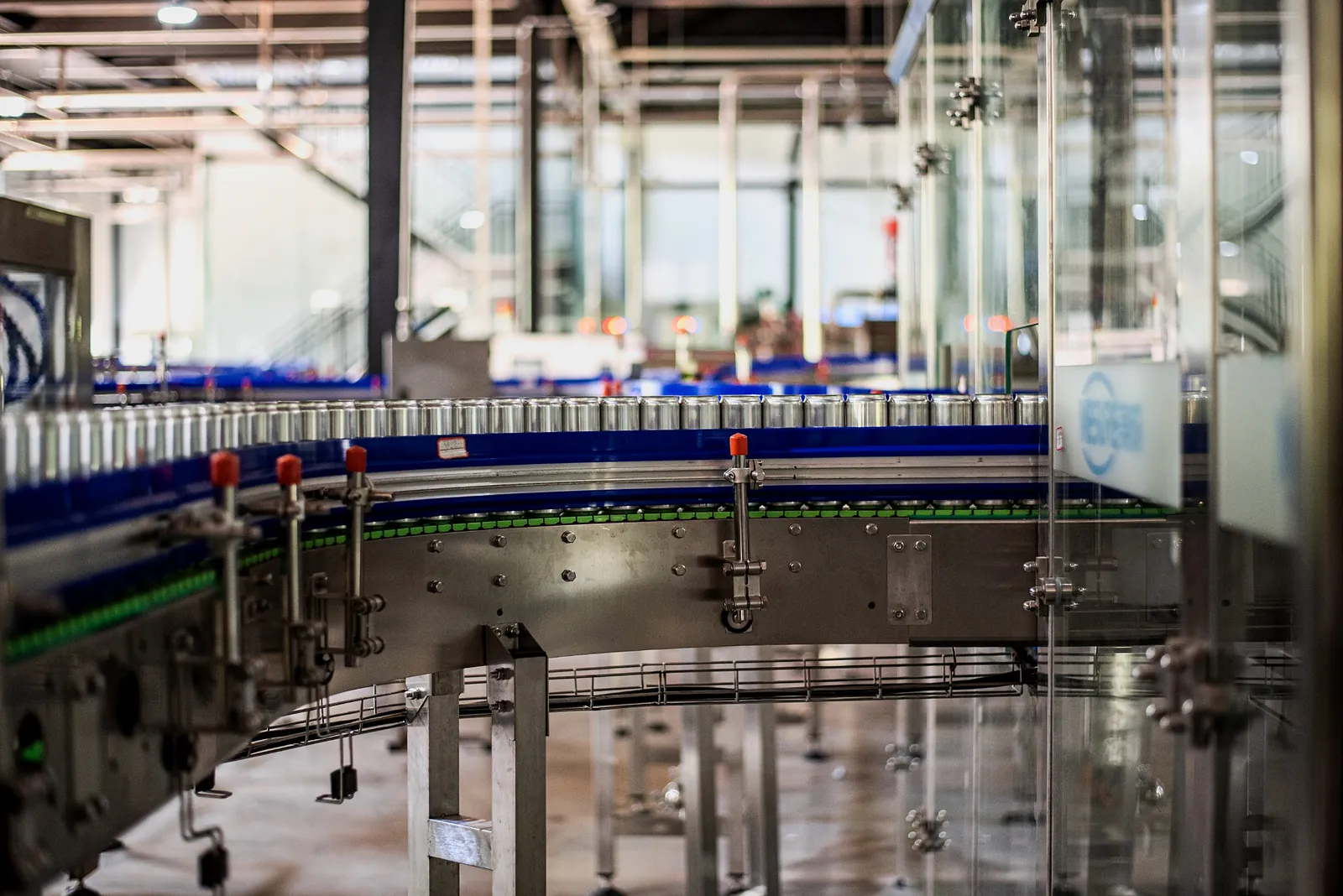
Capital. A canning line is far more than a filler. On our floor a single can passes through water treatment, blending, filling, seaming, retort sterilisation, sleeving and palletising, and you can walk through each station of our canning facility to see what that involves. Buying that equipment, and a building to put it in, before you know whether the drink sells is a very large bet. A co-packer turns it into a cost per can.
Speed. An existing line already has its food safety system, registrations and trained crew, ready for your run.
Compliance that is hard to build alone. Some drinks carry serious regulatory work. Plain coconut water, for example, is a low-acid food under US rules, which brings a validated heat process and FDA filings with it. A co-packer used to heat-treating low-acid drinks already works inside that system; a founder starting from scratch would be learning it on their own money.
The trade-offs worth weighing
Minimums. Set-up, cleaning and changeover are a fixed cost for every run, however many cans follow them, so co-packers set minimum runs. UF/IFAS notes that "larger co-packers will only produce greater amounts of a product, whereas smaller co-packers offer smaller production runs." Ask for the minimum on the first call, and ask what drives it: can size, flavour count, materials.
Control. You swap direct control for documents and access. That is a fair trade if the documents are good and the access is real. If a co-packer is reluctant about an audit or a visit, treat that as information.
Scheduling. Your drink shares the line with other brands. The same UF/IFAS guide notes that many co-packers ask clients to confirm production at least a month ahead. A big retail order that lands on a Monday does not mean cans on Friday.
Confidentiality. Nobody can make your drink without seeing the formula. Sign a confidentiality agreement before you share it, and settle who owns any changes. Don't count on exclusivity: NC State's guide observes that most co-packers "will not agree to noncompete arrangements, as that would restrict their livelihood."
How a co-packing project usually runs
- Enquiry. Drink type, can size, rough volumes, target market.
- Specification. Formula, fill method, packaging and label. Fill method is fixed here because still and carbonated drinks run differently; our explainer on hot-fill vs cold-fill shows why.
- Samples. You taste and approve before anything is scaled.
- Quote and minimum. Unit price, minimum run and the cost drivers behind both.
- Materials and scheduling. Packaging ordered, line slot booked.
- Production. The run, with in-process checks.
- Documents and dispatch. Certificates, export paperwork, pallets out.
Timing differs between co-packers, so ask for it in writing. On our line, a first run takes roughly six to eight weeks, mostly waiting on imported cans, lids and sleeves. Repeat runs are faster.
Where Samley fits
Samley has made Ceylon tea and coconut products since 2015, and we now run our own canning line in Sri Lanka, where blending and filling sit under one roof. Water treatment, blend tanks, filler, seamer and retort are in the same building, so a recipe is never handed to a third party mid-process. You can bring a finished formula for us to can to spec, or bring an idea and develop the recipe with our blending team.
The line fills 250 ml and 355 ml aluminium cans, still and sparkling. The full line specification sits with our answers in the co-packer checklist.
Some things are better heard on the first call than at the quote. A run starts at 10,000 cans per flavour, and we prefer 50,000. Sleeves have their own print minimum of 10,000 per design. Our site holds FSSC 22000 and FDA registration, and we are adding the canning line to that certification scope now, so ask us where that stands for your drink and your market before you plan a launch around it.
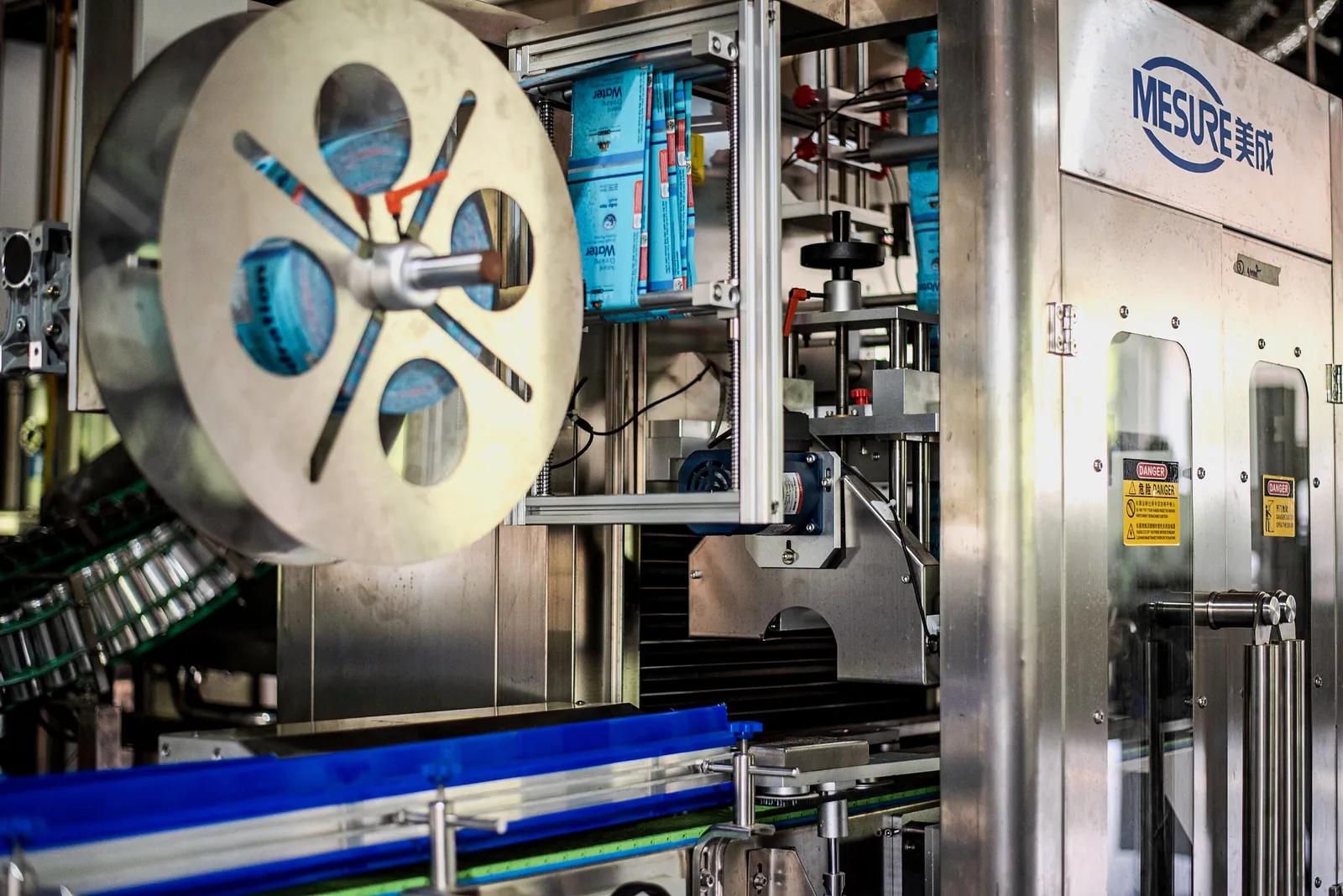
We fill cans only. If your brand needs glass or PET, we are the wrong co-packer.
Two more questions
How much does co-packing cost? There is no honest single figure, because the price per can is built from the formula, the ingredients, the can size, the packaging, the run length and the heat treatment. Expect a unit price, and on some projects one-off costs. On our line, samples are free, and the one-off cost most brands meet is the printing cylinder for each sleeve design. UF/IFAS suggests asking whether a co-packer can guarantee a price for a year and confirming there are no hidden fees.
Can my co-packer be in another country? Yes. Distance changes the questions, not the model: freight and landed cost, import rules in your market, and the co-packer's registrations there. For the US, the FDA requires facilities that manufacture, process, pack or hold food for consumption in the United States to register with the agency. Heat-treated, shelf-stable cans also matter here, because they travel without a cold chain. We quote an 18-month ambient shelf life for our canned drinks; the figure for yours is confirmed by testing your drink, and 18 months leaves room for sea freight, customs and time on a distributor's shelf.
Your next step
If you are comparing who should make your drink, our checklist for choosing a beverage co-packer lists the questions worth asking any of us, with what a good answer sounds like. When you want to test those answers against a real line, send your drink type, can size and rough volumes through our beverage co-packing page, or arrange a visit to see the line running. We would rather you judged us on the floor than on a spec sheet.