
"What's your minimum?" is a fair first question to put to a beverage co-packer. It's just asked in the wrong order. A low minimum on a line that can't process your drink safely is worth nothing, and a co-packer who quotes a number before asking what's in the can hasn't yet understood what they'd be making.
This is the checklist we'd want in your hands before you call anyone, us included. It covers what to check, what to ask on the first call, and what a good answer sounds like. We run our own canning line in Sri Lanka, so these are questions we answer ourselves. If you're still working out what a co-packer does and what stays yours, start with our plain-English guide to co-packing.
Before you call: write a one-page spec
A co-packer can only answer well if you give them something to answer. One page is enough:
- The liquid. Category, key ingredients, sweetness, and whether it's carbonated.
- Finished pH, if you know it. It decides the process your drink needs (more on that below). If you don't know it yet, say so. That's normal at this stage.
- Format and size. Can or bottle, and which size.
- Target markets. The same drink sold in the US and in the UK can need different labels and different paperwork.
- Rough volumes for the first run and the first year.
- What you're bringing. A finished formula, or an idea that still needs developing.
A co-packer who reads that page and comes back with questions of their own is doing their job.
1. Can they physically make your drink?
Capability comes before price, and it comes down to three things.
Fill method. Carbonated drinks are filled under counter-pressure so the gas stays in the liquid. Still drinks are handled differently again. And a still drink with a finished pH above 4.6 is, in US regulatory terms, a low-acid food, which needs a validated thermal process such as retort sterilisation before it can sit on an ambient shelf. If a co-packer only runs one side of that divide and your drink sits on the other, the conversation ends there. Our guide to hot fill vs cold fill walks through which side your drink is on.
Formats. Ask which can or bottle sizes run on the line today, not which ones could be added "if the volume is there."
Liquid types. Pulp, particles, dairy and fruit content all change what a filler can handle. Ask whether they've run something close to yours, and whether you can taste it.
2. Certificates you can check yourself
Logos cost nothing to put on a website. These three checks cost you ten minutes.
FSSC 22000. It's a food safety certification scheme recognised by the Global Food Safety Initiative, and you don't have to take anyone's word for it: search the company in the FSSC public register. Then read the scope statement. A certificate that covers tea blending at one site tells you nothing about beverage filling at another.
FDA registration. Useful, but understand what it is. FDA states plainly that it does not issue a certificate of registration and does not recognise registration certificates issued by private businesses. If someone sends you a framed "FDA certificate," you're looking at a document FDA didn't produce.
Low-acid drinks going to the US. Here the rules get specific. A foreign processor thermally processing low-acid foods in sealed containers for the US market must register the canning establishment with FDA and file its scheduled processes before packing a new product. Ask whether that's in place, or who files it for your drink.
One more, and it's about you rather than them. If you'll be the US owner or consignee of the imported drink, you're the importer under FDA's Foreign Supplier Verification Programs rule, which means evaluating and verifying your supplier yourself. Ask early which records the co-packer will share to support that.
3. Minimums, and what they're made of
We won't give you a typical number, because there isn't an honest one. Minimums vary by drink, by can size and by the packaging behind them. What you can do is ask what the number is made of: blend batch size, the time it takes to change over and clean the line, or the minimum order on printed cans or labels. That last one can dwarf everything else, which is why decoration deserves its own conversation (we cover it in cans vs glass bottles).
Ask for the minimum per flavour and per run, and whether two flavours can share one run. A good answer comes with a reason attached.
4. Lead time: ask what's inside the number
A first-run lead time is several clocks running at once: sampling and approval, packaging procurement, a production slot, and shipping. Ask which of those is the long one. If cans or sleeves have to be imported, ask how long that step takes on its own, because that's where a delay would come from.
5. Formulation and ownership
Some co-packers only fill finished formulas. Others develop one with you. Either is fine, as long as you know which you're buying and who owns the result. If you pay for development, get ownership of the formula written into the agreement before work starts. The ownership question shifts depending on whether you're buying co-packing, contract manufacturing or private label; our guide to co-packing vs contract manufacturing vs private label sets out who owns what under each.
6. QA during the run, not only at the end
In canning, the seam is what keeps a sterile drink sterile. Ask how often seams are checked during a run, how carbonation and fill level are measured, whether retained samples are kept from each batch, and what paperwork comes with each shipment. Then ask who arranges shelf-life testing and who pays for it. Nobody should be vague about that.
7. Visits, audits and who picks up the phone
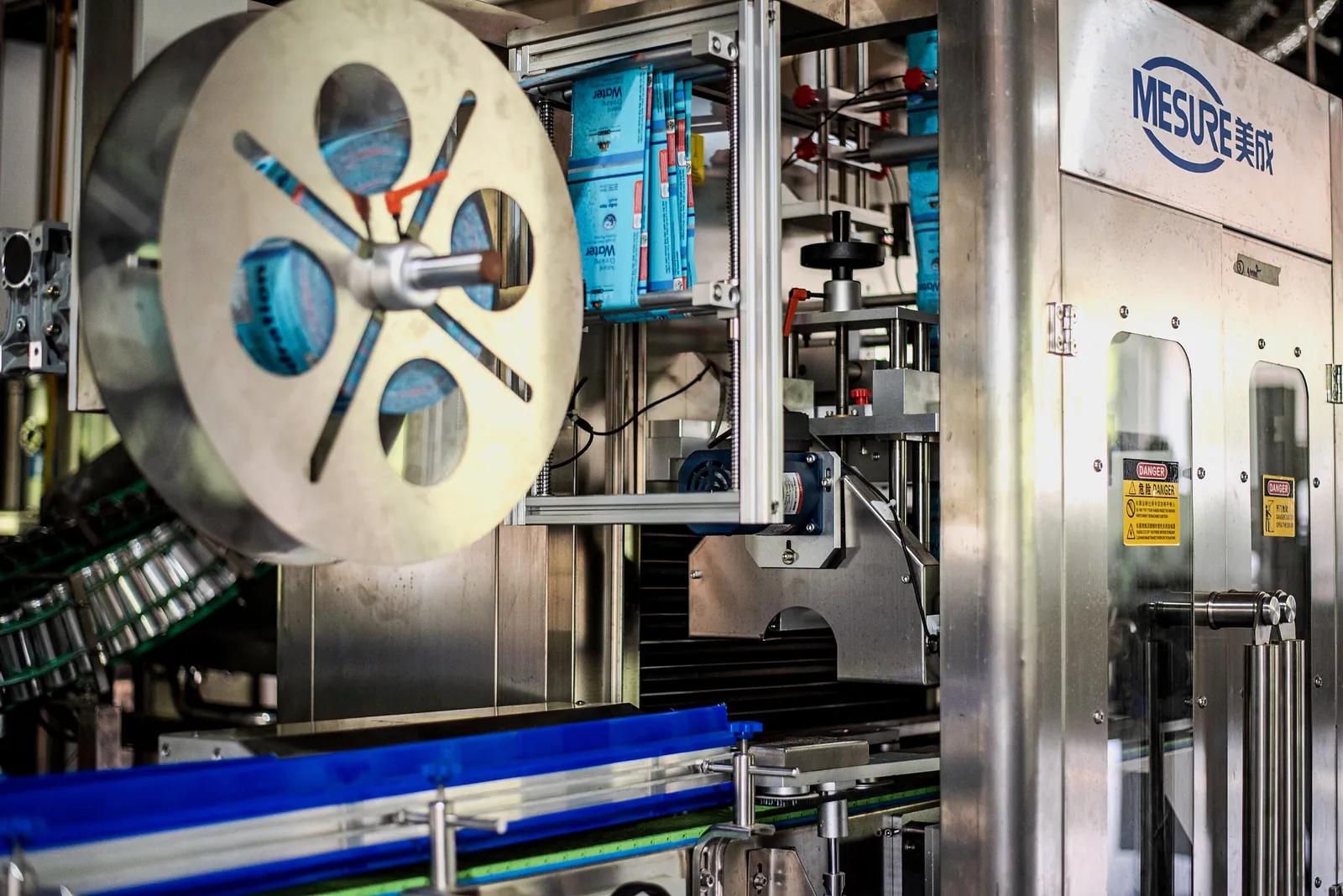
Ask to see the line, ideally while it's running something. A facility that welcomes a visit or a third-party auditor has nothing to stage. Then ask who your day-to-day contact will be, and how you'll hear about a problem if one happens at 2 a.m. their time.
Red flags worth walking away from
- A minimum quoted before anyone has asked about your drink.
- A certificate whose scope doesn't match the site or the product.
- An "FDA certificate" offered as proof of approval.
- Reluctance to let you visit or audit.
- Vagueness about who owns a formula they develop.
- "We can fill anything." Ask what the line can't fill. The co-packer who names its limits is easier to trust.
The first-call question list
Print this, or paste it into your notes before the call.
| Question to ask | Why it matters | What a good answer sounds like |
|---|---|---|
| Which fill method would my drink run on, and why? | Carbonation and pH decide the process | "Your pH puts it in low-acid territory, so it needs hot-fill plus retort. Here's what that means for flavour." |
| Which formats run on the line today? | Avoids paying for a changeover that isn't really available | A short list of sizes they fill now |
| Have you run a drink like mine? Can I taste it? | Real experience beats a spec sheet | Yes, with a sample, or an honest no and how they'd trial it |
| Can I see your FSSC 22000 certificate and its scope? | Scope must cover beverage filling at this site | A certificate you can find in the public register |
| For the US: is FDA canning registration and process filing in place for a drink like mine? | Required for low-acid drinks exported to the US | A clear yes, or a clear plan for who files and when |
| What's the minimum per flavour, and what drives it? | Minimums hide in packaging and changeovers | A number for your drink and size, with the reason |
| What's the first-run lead time, and which step is the long one? | Tells you where delays would come from | A breakdown, not only a total |
| Who owns a formula you develop for me? | Protects your brand if you move later | "You do, and it's in the contract" |
| Who sources cans, lids and labels or sleeves? | Decides who carries supply risk | A clear split of responsibility |
| What's checked during the run, and what paperwork comes with each batch? | Seams, gas and fill level decide shelf life | Named in-process checks and batch records |
| Can I visit during a run, or send an auditor? | Openness is a signal in itself | "Yes, let's schedule it around a production day" |
| Who is my contact, and how do you report a problem? | Problems happen; silence is the risk | A named person and a described process |
How we answer these ourselves
Since we're asking you to put these questions to every co-packer, here are our own answers.
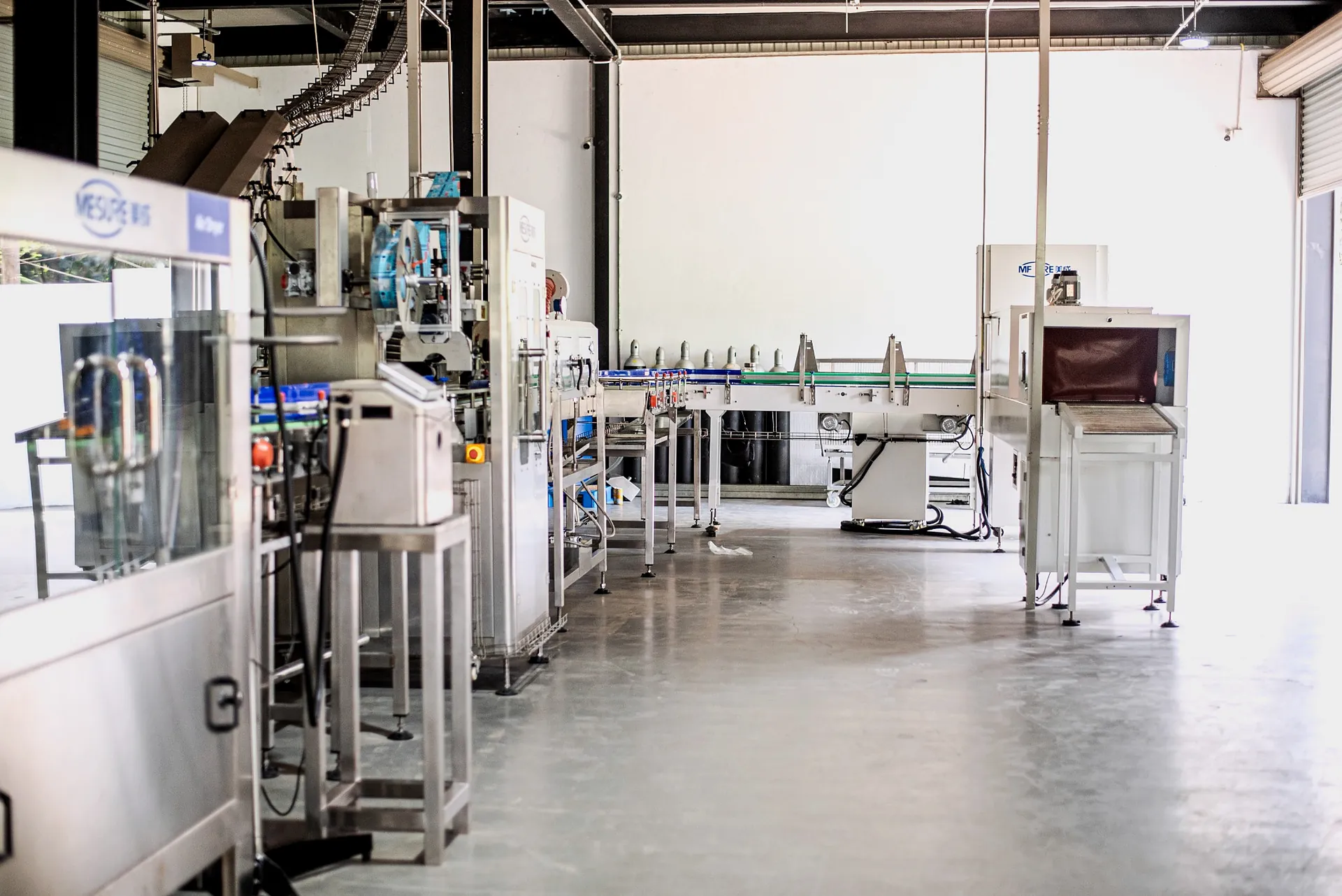
We fill two-piece aluminium cans only, in 250 ml and 355 ml, at up to 5,000 cans an hour. We don't fill glass. Still drinks run hot-fill with nitrogen dosing, carbonated drinks run cold-fill with CO2 under counter-pressure, and low-acid drinks go through retort sterilisation. Water treatment, blending, filling, seaming, sterilising, full-wrap sleeving, casing and palletising sit in one building. Seams, CO2 and fill level are checked during the run. You can bring a finished formula or develop one with our blending team, and we supply more than 25 export markets.
On certificates, since we have just told you to read the scope: our site holds FSSC 22000 and FDA registration, and we are adding the canning line to that FSSC scope now. Ask us where that stands on the day you call, and check it in the public register yourself.
Our floor is 10,000 cans per flavour per run, with 50,000 preferred, and sleeves start at 10,000 per design. The figure for your drink is confirmed once we know what is in it. Samples are free. A first run takes roughly six to eight weeks, mostly because we import the cans, lids and sleeves for it. We quote an 18-month ambient shelf life for our canned drinks; the figure for yours is confirmed by testing your drink. You're welcome to visit or send an auditor, ideally during a run.
Send us your one-page spec
Write the one-page spec first. Then send it to two or three co-packers, us included if a canned drink is what you're making, and compare the questions they ask back as much as the answers they give. You can send your drink spec through our co-packing page or arrange a line visit with our team, and we'll reply with the questions we'd need answered before quoting.